
Endoscope Depth of Field vs Field of View: Key Differences & Selection Guide
When buying or using industrial and medical endoscopes, two optical specs control inspection quality. These key metrics are endoscope depth of field (DOF) and endoscope field of view (FOV).
Most inspectors and buyers mix up DOF and FOV easily. This mistake causes blurry shots, limited coverage and wrong lens picks for jobs. We explain these vital specs for all nondestructive testing (NDT) tasks. You will learn the gap between endoscope DOF and FOV, plus their optical traits. We also share practical usage tips for users of professional Yateks industrial endoscope.
What Is Endoscope Field of View (FOV)?
Endoscope Field of View (FOV) refers to the maximum horizontal viewing angle captured in one frame, measured in degrees (°). It controls the coverage range during internal inspection.
All our standard endoscope lenses feature a 100°–120° ultra-wide FOV, maximizing coverage for rapid pipeline and equipment scanning. Only our dedicated far-focus long-distance lens adopts a slightly narrower 90° FOV. The narrower angle optimizes long-distance sharpness and larger depth of field, at the cost of a small reduction in horizontal viewing range.
We offer two lens FOV options for different inspection needs:
- Standard Wide Lens (100°–120°)
Our mainstream configuration. One frame covers most pipe inner walls, minimizing repeated probe movement, perfect for routine large-area flaw screening.
- Far-Focus Long-Range Lens (70°)
Built for deep, lengthy tubular structures. Balances moderate viewing width with superior far-end clarity and full-range focus from near to far.
What Is Endoscope Depth of Field (DOF)?
Endoscope Depth of Field (DOF) represents the effective front-to-back distance range where the endoscope lens can produce sharp, clear images, measured in millimeters (mm) or meters (m). In short, DOF defines how near and far you can see clearly with an endoscope. Any object within the depth of field range stays in focus, while targets outside this range appear blurry and unrecognizable for defect judgment.
Endoscope depth of field is a decisive factor for continuous, smooth inspection, especially in uneven or long-distance detection environments. Based on practical industrial usage, endoscope DOF falls into two main categories:
Large Depth of Field Endoscope: A large DOF range typically covers from several millimeters up to 1000mm or longer. Endoscopes with great depth of field maintain clear imaging for both close and distant objects without frequent focal length adjustment. This is the mainstream configuration for our industrial video endoscopes used in long pipeline detection, engine maintenance, and general on-site inspection.
Shallow Depth of Field Endoscope: A shallow DOF only keeps a narrow distance range in sharp focus. It blurs distant background interference effectively, highlighting local tiny defects. This optical design works for close-range surface flaw observation.
Core Differences Between Endoscope DOF and FOV
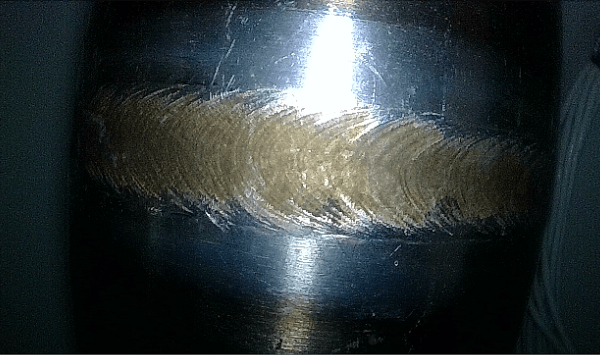
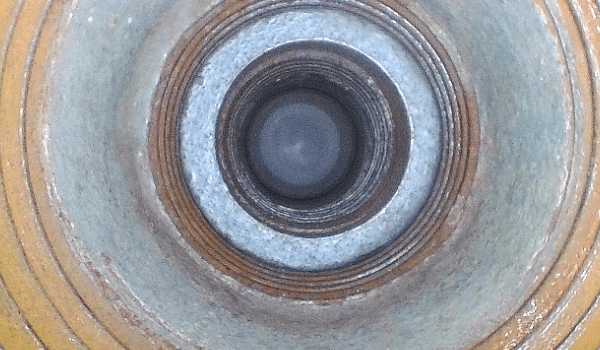
The biggest difference between endoscope DOF and FOV lies in their working optical dimensions: Field of View controls horizontal viewing width, while Depth of Field controls longitudinal clear imaging distance. FOV solves the problem of “how wide you can see”, and DOF solves the problem of “how far you can see clearly”. The following comparison table intuitively explains their functional differences for endoscope selection:
| Comparison Item | Endoscope Field of View (FOV) | Endoscope Depth of Field (DOF) |
|---|---|---|
| Visual Dimension | Horizontal left-right viewing range | Longitudinal front-back clear distance |
| Core Function | Determines inspection coverage and scanning efficiency | Determines effective in-focus imaging range |
| High Value Performance | 100°–120° ultra-wide vision, full pipeline coverage | Long clear range, no frequent focusing required |
| Low Value Performance | 70° far-focus lens with slightly narrower view, traded for deeper DOF | Short clear range, higher local imaging precision at close distance |
| Typical Application | 100–120° lens: Large-area rapid pipeline scanning
70° far-focus lens: Deep long tubular inspection |
Long pipeline detection (Large DOF)
Surface micro flaw observation (Shallow DOF) |
Optical Trade-Off & Best Endoscope Parameter Selection
There is a classic optical balance between endoscope field of view and depth of field. An ultra-wide FOV will slightly compress the depth of field and cause marginal distortion; an ultra-large DOF will limit the maximum viewing angle of the endoscope lens. For this reason, blindly pursuing maximum FOV or DOF cannot guarantee optimal inspection results—parameter matching based on application scenarios is crucial.
1. Routine Industrial Inspection & Fast Scanning
For pipeline nondestructive testing, mechanical internal inspection, and daily defect screening, choose an endoscope with wide FOV and large DOF. This combination ensures broad scanning coverage and stable clear imaging for both near and far targets, greatly improving overall inspection efficiency and avoiding missing potential defects. This is the core optical advantage of Yateks wide-angle industrial borescope for mainstream on-site pipeline inspection scenarios.
2. High-Precision Micro Defect Detection
When detecting tiny cracks, casting porosity, and precision component flaws, select an endoscope with narrow FOV and shallow DOF. The narrow field of view provides optical magnification for local areas, while the shallow depth of field eliminates background clutter, making subtle defects more distinguishable and supporting accurate dimensional measurement. Yateks high-precision measurement endoscope adopts this optimized parameter configuration to meet strict precision flaw detection standards.
Final Conclusion
To summarize the endoscope depth of field vs field of view difference in one sentence: FOV is your viewing width for coverage, and DOF is your clear distance for sharp imaging. Mastering these two core optical parameters helps users select the most suitable industrial endoscope, stabilize imaging quality, and improve the accuracy and efficiency of all inspection work, which is the core design concept of all Yateks professional endoscopic inspection devices.
Whether for industrial NDT inspection or professional medical examination, reasonable matching of endoscope FOV and DOF is the key to maximizing your endoscope equipment performance. All Yateks endoscope series are strictly calibrated with standardized FOV and DOF parameters to meet global industrial inspection requirements.