
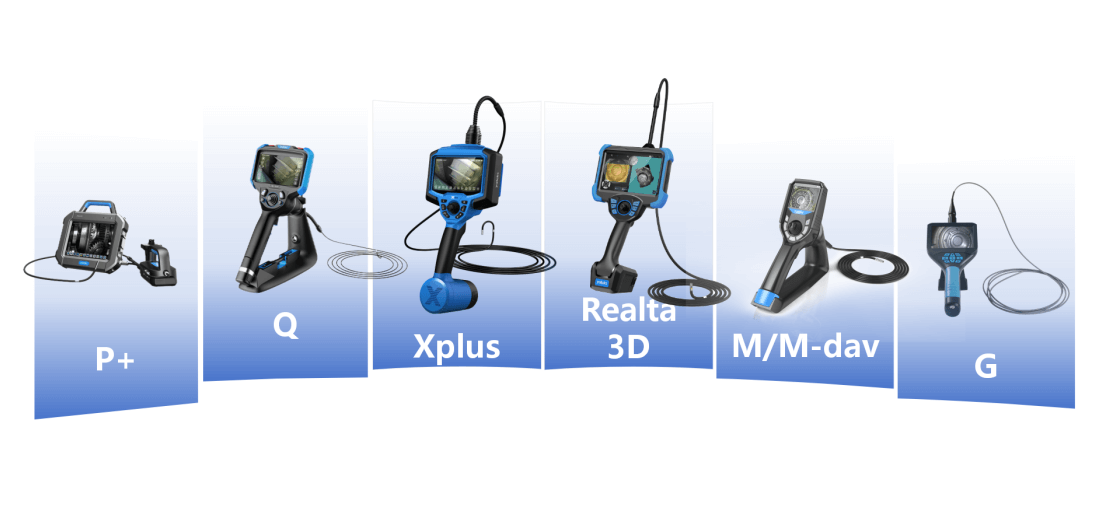
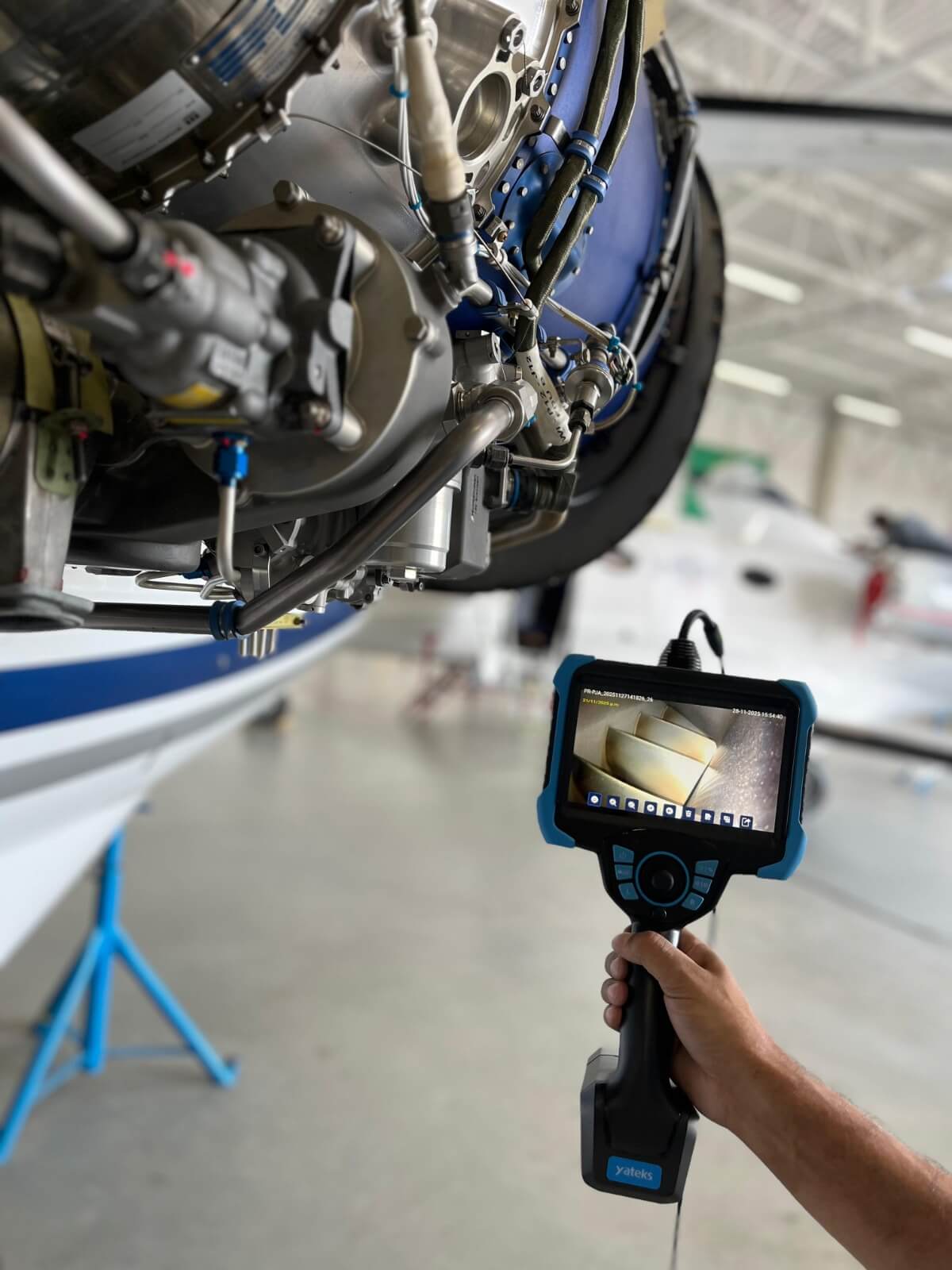
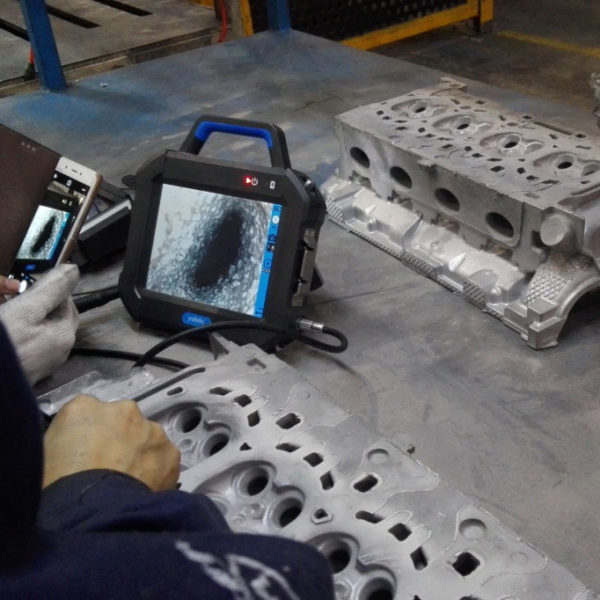
Choosing a borescope inspection camera used to be simple: pick the most expensive one your budget allowed and hope it fits the job. In 2026, that approach can cost you months of downtime. Today’s industrial borescopes are no longer reactive troubleshooting tools — they are data-collection instruments inside broader asset-integrity and predictive-maintenance programs. The right unit pays for itself in one avoided teardown; the wrong one burns a six-figure inspection budget and still misses the crack.
This guide walks you through what actually changed in 2026, the eight specifications that determine whether an industrial borescope camera will perform in your environment, and how to match a unit to your application — without getting sold on specs you don’t need.
Why 2026 Is Different: Inspection Has Gone Predictive
The biggest shift in the industrial endoscopy market is not a new sensor — it’s a new operating model. As maintenance teams move from scheduled teardowns to predictive maintenance, borescopes have moved up the workflow: they now collect the visual evidence that feeds condition-monitoring decisions long before a component fails.
That changes what buyers should optimize for. The most advanced 2026 units share four trends:
- High-definition as the baseline — 1080p is now the entry standard for professional work, with 4K reserved for critical defect analysis where you need to measure crack dimensions or evaluate surface texture.
- Wireless-first workflow — inspection evidence increasingly lives in the cloud, not on a captured SD card. Units with Wi-Fi/App connectivity and report generation fit seamlessly into digital inspection and audit workflows.
- Articulation is the new differentiator — in complex machinery, a camera you can’t steer is a camera that only sees the easy 5% of the cavity. 4-way articulating tips (and even 360°/multi-axis control on high-end models) have become the professional standard.
- Durability for the real shop floor — IP-rated, drop-resistant, temperature-tolerant housings matter more than ever, because the worst environment is where the failure actually happens.
If any supplier is still selling you on “megapixels” alone, walk away. Resolution is one input to image usability — never the whole decision.
Borescope vs Endoscope: What’s the Difference?
A quick clarification before we get into selection, because this question comes up constantly and the terms are often used interchangeably.
Strictly speaking, a borescope is a rigid or flexible optical tube designed to look inside confined spaces; an endoscope is the medical term for the same principle, and in the industrial world the two words are frequently used as synonyms. What actually matters in 2026 is the mechanical architecture of the probe:
| Type | Best for | Typical trade-off |
|---|---|---|
| Rigid borescope | Straight-line access, aerospace combustion chambers, precision inspection | Superior image clarity and dimensional accuracy; cannot navigate bends |
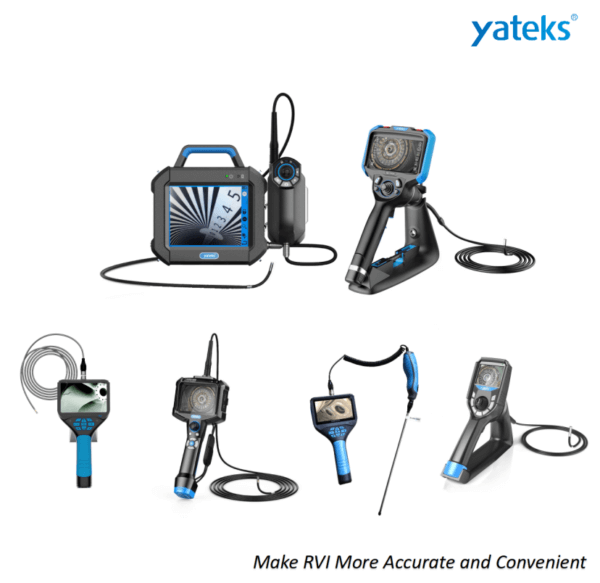
| Flexible borescope / videoscope | Curved paths, complex machinery, most maintenance work | Reaches around corners; requires articulation control to aim |
| Articulating borescope | The majority of industrial applications | Full 4-way tip steering; highest usability and ROI for deep cavities |
For most industrial maintenance, inspection, and NDT teams, a flexible, articulating borescope camera is the correct default. Rigid units remain the specialist’s tool for specific straight-line applications.
The 8 Specifications That Actually Matter in 2026
1. Probe Diameter — The First Gate
Probe diameter decides whether the camera gets in at all, and it’s the specification you cannot compromise on. Industrial units typically range from 0.75 mm ultra-slim (precision valves, injectors, micro bores) to 8–9 mm rugged heads (turbines, engine blocks, large castings). A common professional sweet spot is 5.5–6 mm, which fits standard access ports while retaining enough durability for repeated use.
Rule of thumb: pick the smallest diameter that reaches your access point — never buy a bigger probe “just in case” and hope the opening cooperates.
2. Image Resolution and Sensor
1080p is the professional baseline for 2026. Choose 4K only when you need to quantify defects — crack width, corrosion depth, surface texture — because 4K sensors in a small probe typically cost more and capture at higher data rates. Pair resolution with a wide dynamic range and good low-light sensitivity; in a dark turbine cavity, usable dynamic range beats raw pixel count every time.
3. Articulation — Can It Steer?
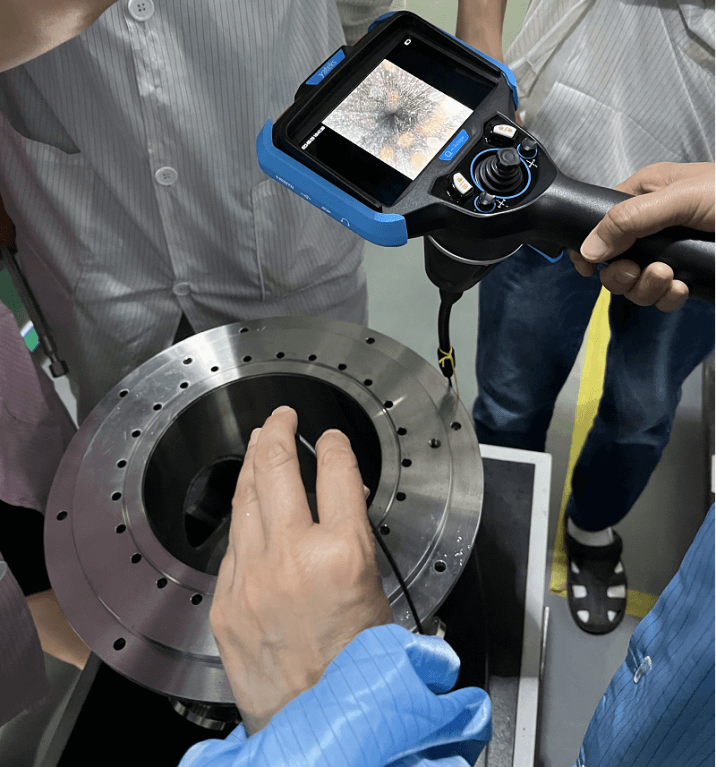
This is the single highest-value feature for industrial work. A 4-way articulating tip lets you steer the camera around obstacles and aim at side walls — essential for gearboxes, hydraulic systems, valves, and any cavity where the defect is off-axis from the access hole. High-end units add multi-axis joystick control and position-locking, which is what makes “articulating borescopes for efficient inspection” genuinely efficient instead of a frustrating two-hand operation.
4. Cable Length and Flexibility
Match length to your deepest inspection point, with margin. Industrial probes commonly run 1 m for handheld work, 3 m for typical maintenance, and up to 30 m for large machinery, pipes, or duct systems. Longer cables reach further but are harder to feed and store, so buy the length you need — not the longest available. Check whether the cable is semi-rigid (holds shape) or fully flexible, as this changes how well you can hold the tip in position while documenting.
5. IP Rating and Environmental Durability
An inspection camera that dies in the field is worse than no camera. Verify the IP rating (water/dust ingress protection), operating temperature range, and drop resistance against your real environment — steel mills are dustier than clean rooms, offshore sites are saltier than workshops, and foundries are hotter than both.
6. Lighting
Most industrial cavities are completely dark, so adjustable LED brightness is non-negotiable. Look for controllable intensity to avoid glare on reflective surfaces, and consider dual front + side illumination or multi-light modes when you inspect glossy, machined, or wet components.
7. Display and Connectivity
A built-in, high-brightness display with sunlight readability matters for outdoor and plant-floor work. In 2026, connectivity matters just as much: Wi-Fi/App streaming, on-device report generation, and cloud-ready evidence capture let you document findings on the spot and integrate the inspection into your maintenance system instead of printing grainy photos later.
8. Battery, Storage, and Lifecycle Cost
Look beyond the price tag: battery runtime for a full shift, storage capacity and export formats, ease of firmware updates, and the manufacturer’s support and warranty. For a unit used daily, total cost of ownership — not sticker price — is what belongs in your comparison.
How to Choose by Application
Different industries stress different specifications. Use this as a starting checklist:
| Application | Prioritize |
|---|---|
| Wind power / turbine blades & gearboxes | 4-way articulation, long cable, high durability, 1080p+ |
| Marine & offshore | IP-rated waterproofing, corrosion resistance, rugged housing |
| Steel & foundry | Temperature tolerance, dust protection, replaceable tips |
| Tunnel boring / heavy machinery | Extra-long cable, 360° steering, robust feeding capability |
| Aviation (combustion chambers, blades) | High clarity + dimensional accuracy, often rigid or semi-rigid |
| Automotive & general NDT | Slim probe, good articulation, wireless reporting for fast turnaround |
