
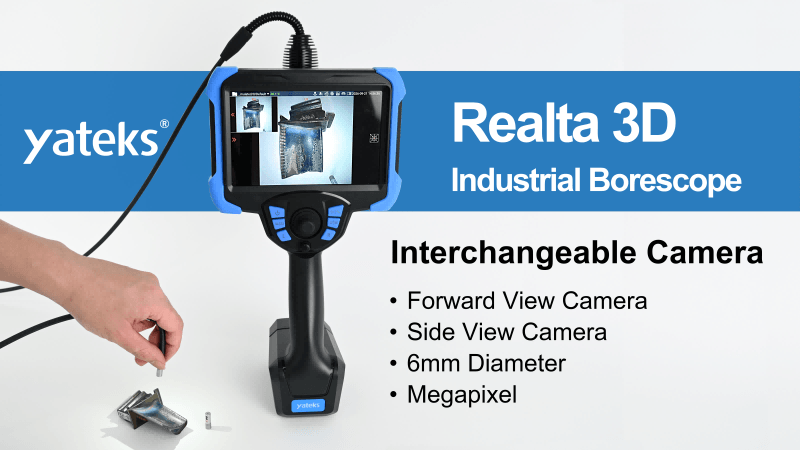
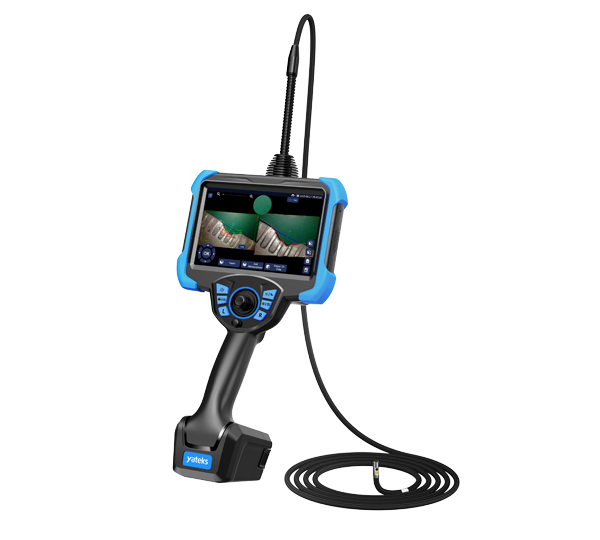
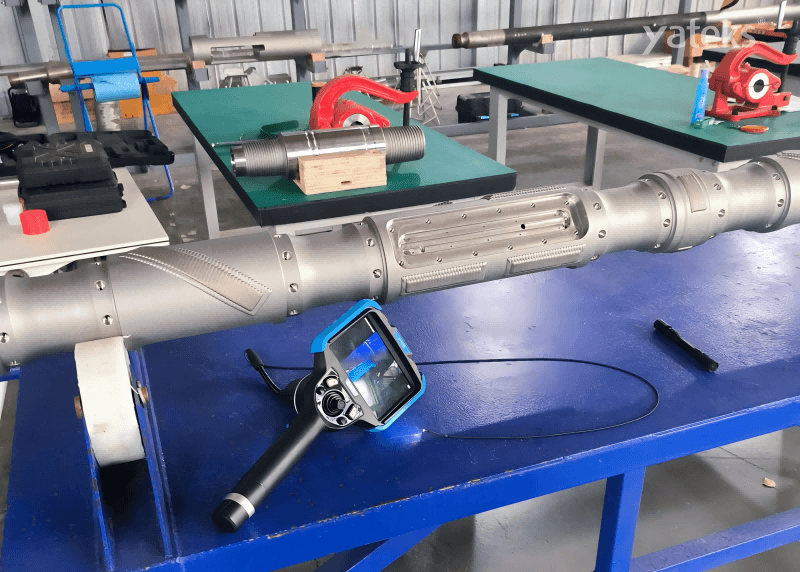
Selecting the right industrial borescope isn’t about finding the most expensive model—it’s about finding the one that best matches your specific inspection tasks. As a professional manufacturer, we understand that the right balance between probe diameter, image quality, operability, durability, and budget is what truly matters.
This guide will walk you through the key decision points to help you make a confident, informed choice.
Step 1: Define Your Inspection Requirements
Before diving into specifications, ask yourself these four questions. Your answers will directly shape your selection:
| Key Consideration | Questions to Ask | Why It Matters |
|---|---|---|
| 1. Entry Point & Access | What is the smallest opening size? Is the internal path straight or does it require bending? | Determines the probe diameter (must be smaller than the entry) and the type of borescope (rigid, flexible, or articulating). |
| 2. Target & Detail Level | What are you looking for? General structure, or tiny cracks, burrs, or corrosion? | Determines the required image clarity (pixels/resolution) and magnification. Critical defect detection demands higher image quality. |
| 3. Inspection Environment | Is the environment high-temperature, oily, or wet? How deep does the probe need to go? | Determines the necessary protection rating (IP67 or higher), temperature tolerance, and probe length. |
| 4. Operation & Reporting | Will a single operator view the image in real-time, or does the team need to collaborate? Do you need to capture photos, record videos, and generate reports? | Determines whether you need wireless streaming (WiFi), a large display, and advanced image recording & reporting software. |
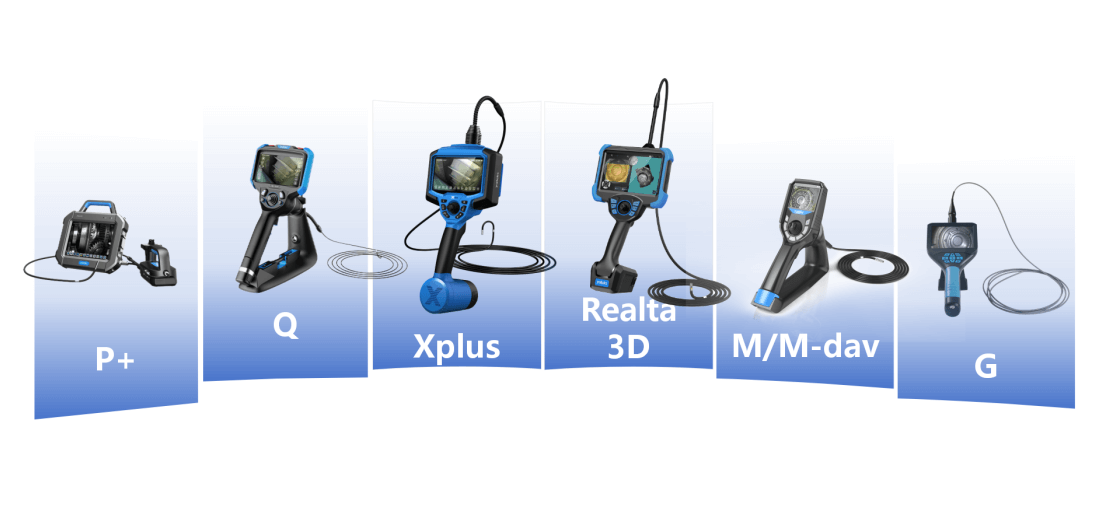
Step 2: Understand the 3 Core Types of Industrial Borescopes
Choose the physical structure that best fits your access path:
-
Video Borescope (Articulating): The current industry standard. The probe integrates a high-definition camera with a flexible, articulating tip that can be precisely steered. This is the most versatile option for complex internal inspections.
-
Flexible Borescope (Non-Articulating): The probe is a flexible snake tube that passively conforms to the shape of the pipe. It cannot be steered. Ideal for relatively straight pipe inspections where directional control isn’t needed.
-
Rigid Borescope: A solid metal tube. Offers the highest possible image quality, but can only be used for straight-line inspections, such as inside engine cylinders or gun barrels.
Step 3: Match Key Technical Specifications to Your Needs
This is the most critical part of the selection process. Translate your inspection needs into concrete specifications.
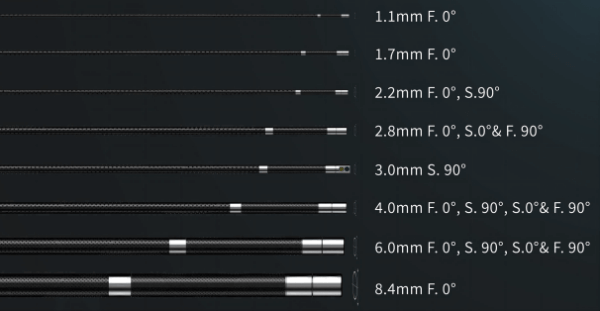
1. Probe Diameter
This is your primary filter. The probe must easily pass through the smallest entry point.
-
0mm – 3mm: For extremely small orifices, like precision parts or micro-pipes. Resolution is typically around 160,000 pixels.
-
3mm – 6mm: The most common diameter range. It balances accessibility with image clarity, making it suitable for most automotive, engine, and general industrial inspections.
-
6mm – 10mm: Designed for large entry points on heavy machinery, large engines, and pipes. Provides superior brightness and image quality.
2. Resolution & Pixels
Higher isn’t always better; choose based on your required level of detail.
-
720P (~1 MP): A cost-effective choice for routine, general-purpose inspections where identifying larger defects is sufficient.
-
1080P (~2 MP): Highly recommended. It captures rich detail, clearly showing fine cracks and scratches, making it ideal for quality-critical inspections.
-
4K and above: Reserved for ultra-high precision applications, such as analyzing microscopic defects on aerospace turbine blades. This level is typically overkill for general industrial use and comes at a premium price.
3. Probe Articulation (Steering)
This is essential for comprehensive inspections inside complex cavities.
-
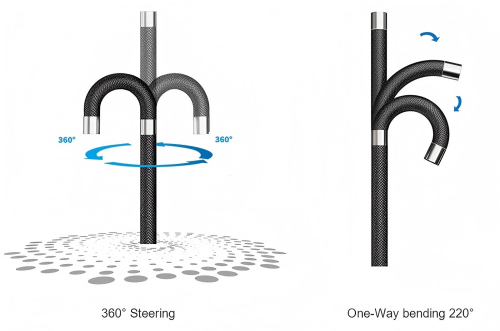
2-Way / 4-Way Articulation: The probe tip can be steered up/down or left/right. This is a common and useful feature.
-
360° All-Way Articulation / Joystick Control: A high-end feature that offers superior handling. It allows you to navigate and inspect every corner with precision and speed, greatly enhancing inspection efficiency.
4. Durability & Environmental Protection
Industrial environments are harsh. A device’s ruggedness directly impacts its lifespan.
-
Ingress Protection: Look for a minimum rating of IP67, which ensures the device is dust-tight and can withstand temporary immersion in water.
-
Wear Resistance: The probe insertion tube should feature a tungsten braid outer layer. This provides excellent resistance to abrasion, oil, and corrosion, which is especially critical for inspections inside engines and metal components.
-
Operating Temperature: Verify the device’s operating temperature range to ensure stable and reliable performance in your specific work environment.
Step 4: Evaluate the Value Proposition – Beyond the Price Tag
Once the technical specifications are aligned, choosing a reliable partner is just as important as the product itself.
1. Manufacturer Reputation
-
Global Tier 1 Brands (e.g., Olympus, FLIR): They lead in technology, image quality, and software ecosystems, but come with a very high price point. Best suited for organizations with substantial budgets and uncompromising requirements.
-
Leading Chinese Manufacturers (like Yateks): Did you know that over 80% of the world’s industrial borescopes are manufactured in Guangdong, China? Manufacturers here offer exceptionally high value, cost-effectiveness, and flexible customization. This is the mainstream choice for most professional buyers.
2. What to Look for in a Supplier
If you’re considering a direct partnership with a manufacturer, here are key indicators of reliability:
-
Operational Metrics: Look for a strong on-time delivery rate (>95%) and a responsive support team (response time < 2 hours) , which reflect efficient operations.
-
Quality Systems: Check for ISO 9001 certification and ask for proof that products meet international testing standards like ASTM E2900.
-
Customization Capabilities: A strong manufacturer should be able to offer comprehensive customization, from probe length and software interface to logo branding.
3. Calculate Total Cost of Ownership
Don’t just look at the upfront price. Evaluate the overall value.
-
Entry-Level (< $30): Suitable for simple visual inspections where high precision is not required, such as basic plumbing or household checks.
-
Mid-Range ($30 – $70): The mainstream choice. These borescopes offer 1080P HD resolution, probe articulation, good durability, and reliable support, meeting the needs of most professional industrial inspections.
-
High-End ($70+): Designed for critical applications in aerospace, power generation, and similar fields. They deliver the best image quality, advanced measurement functions, and comprehensive software support.
Your Pre-Purchase Checklist
Before making your final decision, run through this checklist:
-
Probe Diameter: Can it easily fit through your smallest inspection entry?
-
Image Clarity: Is at least 1080P resolution sufficient to identify the defects you’re looking for?
-
Probe Functionality: Do you need articulation to navigate complex internal geometries?
-
Environmental Suitability: Does it have an IP67 rating and a wear-resistant probe?
-
Supplier Reliability: Does the manufacturer have a proven track record of on-time delivery and responsive support? Can you request a demo unit?
-
Total Cost of Ownership: Does the final price, including necessary accessories and support, fit your budget and deliver the required value?
At Yateks, we specialize in designing and manufacturing high-quality, reliable industrial borescopes that deliver exceptional value. We understand that every inspection task is unique, and we’re here to help you find the right tool for the job.